Tampilkan postingan dengan label Ai. Tampilkan semua postingan

Kamis, 01 April 2010

(Inter)National Poetry Month + Poems: Lucille Clifton & Ai

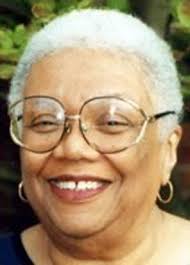
It wouldn't be (Inter)National Poetry Month without some J's Theater poems, would it? So, to start us off, here are poems by Lucille Clifton (1936-2010) and Ai (1947-2010), both of whom have left us with their words this year. I won't post bios, as those are widely available; I'll let their artistry, so differently and amply demonstrated in these works, speak for them.

wishes for sons

by Lucille Clifton

i wish them cramps.
i wish them a strange town
and the last tampon.
i wish them no 7-11.

i wish them one week early
and wearing a white skirt.
i wish them one week late.

later i wish them hot flashes
and clots like you
wouldn't believe. let the
flashes come when they
meet someone special.
let the clots come
when they want to.

let them think they have accepted
arrogance in the universe,
then bring them to gynecologists
not unlike themselves.

Lucille Clifton, "wishes for sons" from Next: New Poems. Copyright © 1987 by Lucille Clifton. Reprinted with the permission of BOA Editions, Ltd.

Source: Next: New Poems (BOA Editions, Ltd., 1987)

***

Nothing But Color

by Ai

for Yukio Mishima

I didn’t write Etsuko,
I sliced her open.
She was carmine inside
like a sea bass
and empty.
No viscera, nothing but color.
I love you like that, boy.
I pull the kimono down around your shoulders
and kiss you.
Then you let it fall open.
Each time, I cut you a little
and when you leave, I take the piece,
broil it, dip it in ginger sauce
and eat it. It burns my mouth so.
You laugh, holding me belly-down
with your body.
So much hurting to get to this moment,
when I’m beneath you,
wanting it to go on and to end.

At midnight, you say see you tonight
and I answer there won’t be any tonight,
but you just smile, swing your sweater
over your head and tie the sleeves around your neck.
I hear you whistling long after you disappear
down the subway steps,
as I walk back home, my whole body tingling.
I undress
and put the bronze sword on my desk
beside the crumpled sheet of rice paper.
I smooth it open
and read its single sentence:
I meant to do it.
No. It should be common and feminine
like I can’t go on sharing him,
or something to imply that.
Or the truth:
that I saw in myself
the five signs of the decay of the angel
and you were holding on, watching and free,
that I decided to go out
with the pungent odor
of this cold and consuming passion in my nose: death.
Now, I’ve said it. That vulgar word
that drags us down to the worms, sightless, predestined.
Goddamn you, boy.
Nothing I said mattered to you;
that bullshit about Etsuko or about killing myself.
I tear the note, then burn it.
The alarm clock goes off. 5:45 A.M.
I take the sword and walk into the garden.
I look up. The sun, the moon,
two round teeth rock together
and the light of one chews up the other.
I stab myself in the belly,
wait, then stab myself again. Again.
It’s snowing. I’ll turn to ice,
but I’ll burn anyone who touches me.
I start pulling my guts out,
those red silk cords,
spiraling skyward,
and I’m climbing them
past the moon and the sun,
past darkness
into white.
I mean to live.

Ai, “Nothing But Color” from Vice: New and Selected Poems. Copyright © 1999 by Ai. Reprinted with the permission of W. W. Norton & Company, Inc., www.nortonpoets.com.

Source: Vice: New and Selected Poems (W. W. Norton and Company, Inc., 1999)

Minggu, 21 Maret 2010

Goodbye to Ai (1947-2010)

I learned today that the poet Ai (born Florence Anthony, in 1947), passed away on Friday. Perhaps she isn't as well known these days as many of her peers, but when I was in my 20s, she was a poet many writers I knew talked about, with excitement and awe. Her mastery of the dramatic monologue form; her vivid, searing poetic images and narrators, who included murderers, lusty spouses, people on the very brink of life, as well as famous historical figures; the visionary quality of her voice; her lyric consistency; and her control of the line all thrilled the writers and readers I knew. We would wonder to ourselves and to each other: how does she inhabit these disparate voices so? How does she balance the beauty and pain in them so well? Who is she and where did she come from? What would it be like to hear her read her work live, to talk with her, to study with her? What is she like as a person?


There was an air of mystery about her, beginning with her single name, a dipthong, an exclamation, a breath, which was Japanese and meant "love," we'd heard, and the images of her (she looked to be very beautiful black and mixed-race woman), and her productivity (she had written 3-4 flawless books), and her skill (she knew her way into and out of a lyric moment, how to sketch in a historical backdrop in just a few lines, how to create pathos in a detail or two). Though I'd not seen a single poem of hers in class, he was one of the poets whose books I bought as soon as they hit the shelves and I could afford them. It seemed poetic justice, then, when she finally received the National Book Award in 1999, for her collection Vice: New and Selected Poems, after having received an American Book Award (which once represented a special seal of approval) for her 1986 volume Sin. During my literary journal years, I had the good fortune to communicate with her directly, though I did not get to know her, nor did I keep in touch with her after those days ended.  But I still kept an eye ready for her poetry, which has lost none of its power, and which testifies to the gifts she wielded during her career. Her books also include the poetry collections Cruelty, Houghton, 1973; Killing Floor (Lamont poetry selection), Houghton, 1979; Fate, Houghton, 1991; Greed, W.W. Norton, 1993; and most recently Dread, W.W. Norton, 2003. Additionally she published the novel Black Blood (novel), W.W. Norton, 1997.

Goodbye Ai; your voices will still haunt and disquiet us for years to come.

Here is one of her very fine early ones, on none other than Leon Trotsky (i.e., Lev Davidovich Bronstein).

KILLING FLOOR

by Ai

1. RUSSIA, 1927

On the day the sienna-skinned man
held my shoulders between his spade-shaped hands,
easing me down into the azure water of Jordan,
I woke ninety-three million miles from myself,
Lev Davidovich Bronstein,
shoulder-deep in the Volga,
while the cheap dye of my black silk shirt darkened the water.

My head wet, water caught in my lashes.
Am I blind?
I rub my eyes, then wade back to shore,
undress and lie down,
until Stalin comes from his place beneath the birch tree.
He folds my clothes
and I button myself in my marmot coat,
and together we start the long walk back to Moscow.
He doesn’t ask, what did you see in the river?,
but I hear the hosts of a man drowning in water and holiness,
the castrati voices I can’t recognize,
skating on knives, from trees, from air
on the thin ice of my last night in Russia.
Leon Trotsky. Bread.
I want to scream, but silence holds my tongue
with small spade-shaped hands
and only this comes, so quietly
Stalin has to press his ear to my mouth:
I have only myself. Put me on the train.
I won’t look back.


2. MEXICO, 1940

At noon today, I woke from a nightmare:
my friend Jacques ran toward me with an ax,
as I stepped from the train in Alma-Ata.
He was dressed in yellow satin pants and shirt.
A marigold in winter.
When I held out my arms to embrace him,
he raised the ax and struck me at the neck,
my head fell to one side, hanging only by skin.
A river of sighs poured from the cut.


3. MEXICO, August 20, 1940

The machine-gun bullets
hit my wife in the legs,
then zigzagged up her body.
I took the shears, cut open her gown
and lay on top of her for hours.
Blood soaked through my clothes
and when I tried to rise, I couldn’t.

I wake then. Another nightmare.
I rise from my desk, walk to the bedroom
and sit down at my wife’s mirrored vanity.
I rouge my cheeks and lips,
stare at my bone-white, speckled egg of a face:
lined and empty.
I lean forward and see Jacques’s reflection.
I half-turn, smile, then turn back to the mirror.
He moves from the doorway,
lifts the pickax
and strikes the top of my head.
My brain splits.
The pickax keeps going
and when it hits the tile floor,
it flies from his hands,
a black dove on whose back I ride,
two men, one cursing,
the other blessing all things:
Lev Davidovich Bronstein,
I step from Jordan without you.

Ai, “Killing Floor” from Vice: New and Selected Poems. Copyright © 1999 by Ai. Reprinted with the permission of W. W. Norton and Company, Inc., www.nortonpoets.com.

Source: Vice: New and Selected Poems (W. W. Norton and Company, Inc., 1999)